
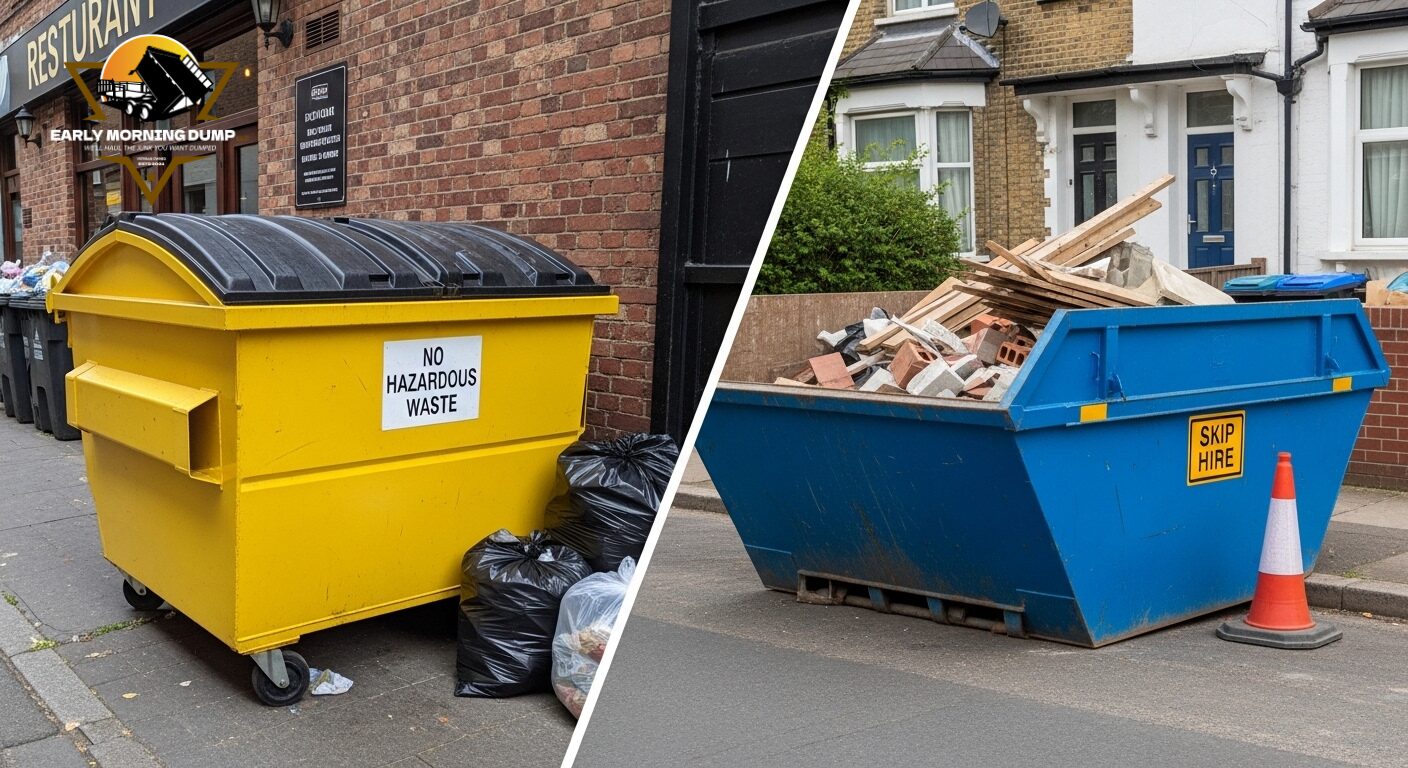
Managing waste efficiently is essential for both residential and construction projects. Understanding the nuances of dumpster rental options can make cleanup easier and more cost-effective. While many people use dumpsters and skips interchangeably, there are notable distinctions. Choosing the right waste container ensures a smoother project flow, minimizes clutter, and adheres to disposal regulations. This guide explores the dumpster vs skip debate, clarifying the differences and helping homeowners and contractors make informed decisions.
A common question is what is a dumpster. Simply put, dumpsters are large, rectangular containers used to collect and transport waste efficiently. Typically placed on-site for construction projects, home cleanouts, or commercial renovations, they allow for easy disposal of bulky debris. Construction waste container services often rely on dumpsters because of their durability and ability to handle heavy loads like concrete, wood, and metal. Many dumpster options are designed for both temporary and extended use, ensuring convenience in various scenarios.
Homeowners benefit from residential waste container services for decluttering, seasonal cleaning, or renovations. Renting a dumpster reduces multiple trips to a landfill and allows for safer and more organized waste management. For example, dumpster rental for residential projects services provide appropriately sized containers suitable for household waste, yard debris, or renovation materials.
On the other hand, what is a skip bin? A skip is a large open-topped container commonly used in Europe and Australia, but they have gained attention in the US as well. Skips are typically loaded with a crane onto trucks and are ideal for moderate waste volumes. Many skip services are offered through skip bin hire companies that cater to homeowners, businesses, and small construction projects.
Skips are versatile but usually smaller than dumpsters. Their design makes them convenient for sites with limited access since trucks can pick them up and replace them easily. Many skip bins are also color-coded, indicating what type of waste they are suitable for, which helps streamline disposal and recycling.
Understanding the dumpster and skip difference helps users select the best container for their needs. Here are the primary differences:
Both options are effective waste containers, but understanding the project scope and waste type is essential. A residential waste container may differ significantly from a construction waste container, emphasizing the importance of selecting the right type.
When deciding between skip vs dumpster, consider your project size, location, and budget. Home cleanouts or yard projects may only require a skip bin, while large-scale renovations, roofing, or demolition projects often necessitate dumpster rentals. Dumpster rental services offer flexibility in size, duration, and type, allowing for better waste management planning.
Construction teams prefer dumpsters for heavy debris, as they are engineered for durability and easy loading. Residential users appreciate skip bins for their compactness and convenience, especially when space is limited. Both options are environmentally responsible when combined with recycling and proper disposal protocols.
Selecting the right container also depends on the type of waste. Common waste container types include:
Using the appropriate container not only simplifies the disposal process but also reduces the risk of overfilling, fines, or unnecessary trips to disposal sites. A reliable provider can guide you through the best choice based on project requirements.
Choosing between a dumpster and a skip comes down to project size, waste type, and location constraints. Early Morning Dump LLC services are suited for larger-scale projects, construction debris, and heavy-duty use, while skip bins are better for smaller residential or commercial cleanouts. By understanding the dumpster and skip difference, individuals and contractors can manage waste efficiently, reduce costs, and maintain a safe workspace. Whether you choose skip bin hire or opt for a residential waste container, planning ahead ensures smoother project execution and responsible disposal.
For homeowners interested in decluttering or large-scale renovations, exploring options like residential dumpster rental can streamline cleanup. Meanwhile, commercial spaces can benefit from targeted construction dumpster rental services to handle heavy debris without disruption. Understanding dumpster vs skip is the first step toward organized and efficient waste management.
A dumpster is a large rectangular container placed on the ground and serviced by trucks, while a skip is a smaller open-top container lifted by cranes. Dumpsters are ideal for heavy-duty projects, and skips are suited for smaller residential or commercial cleanouts.
No. In the US, dumpsters are more common, while skip bins are less prevalent. Skips are generally smaller, easier to place in tight spaces, and often used for short-term residential projects, whereas dumpsters are used widely for construction and commercial waste.
For home cleanouts, a skip can be sufficient for moderate amounts of waste and limited space. However, a dumpster is better for larger-scale cleanouts or renovations, as it can accommodate more debris and reduce the number of trips needed for disposal.