
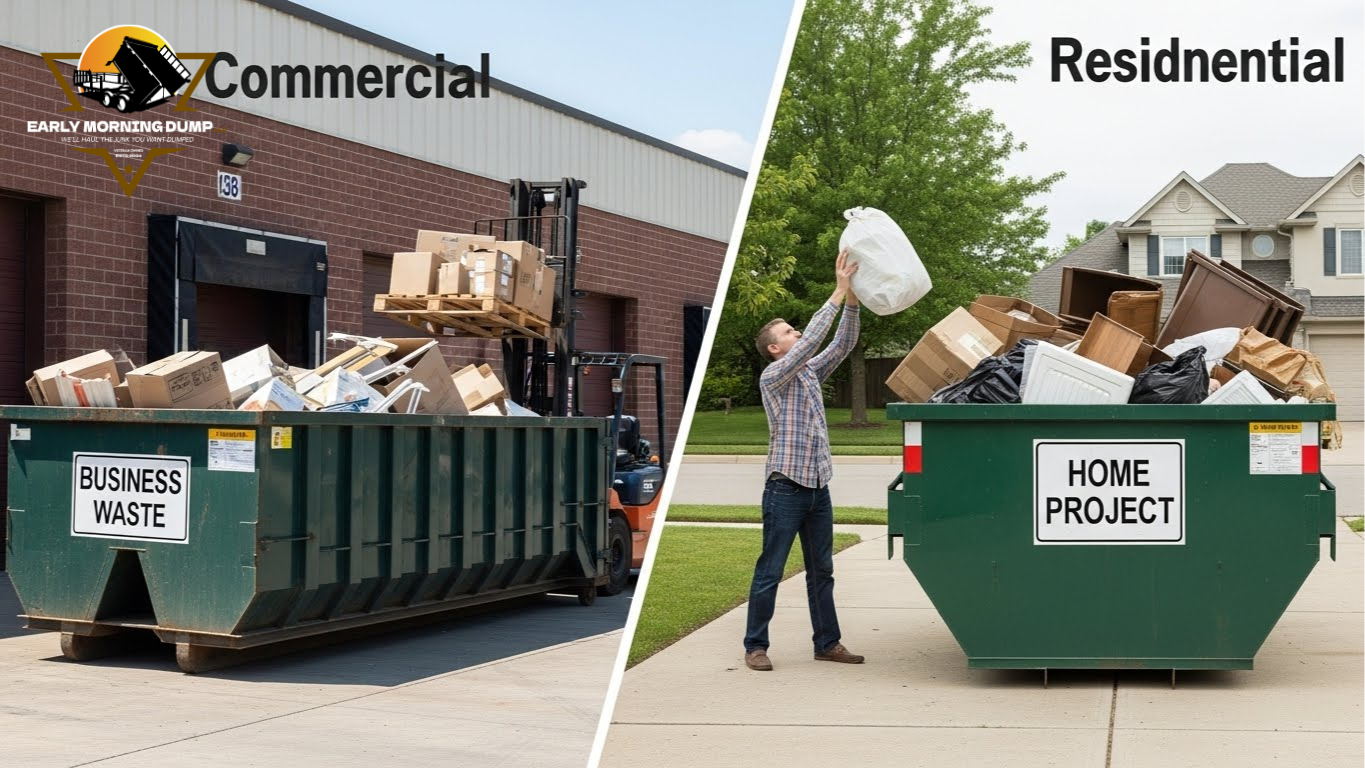
Choosing the right waste solution is a key part of keeping any cleanup project organized and stress-free. Whether you’re remodeling a home, cleaning out an apartment, managing a business renovation, or running daily operations at a worksite, selecting the right dumpster rental keeps debris controlled and timelines on track. While many people assume all dumpsters serve the same purpose, commercial and residential rentals are built for very different needs.
Understanding when to choose commercial dumpster rental versus residential dumpster rental helps prevent delays, safety hazards, and unnecessary costs. Each option exists to serve a specific type of project, and knowing the difference ensures your waste is handled efficiently.
A residential dumpster rental is designed for personal cleanup projects taking place at homes, duplexes, and small residential areas. These rentals are commonly used for garage cleanouts, kitchen remodels, roofing replacements, landscaping jobs, and moving cleanups. Homeowners choose dumpster rental services because they eliminate trips to the landfill and keep debris safely contained throughout the project.
Most residential dumpster rental agreements last a few days to a week, giving homeowners enough flexibility to work at a comfortable pace. These dumpsters are compact enough to fit on driveways, curbside areas, or narrow residential streets without overwhelming the space.
Shared living spaces often rely on apartment dumpster rental services when multiple units undergo cleanouts, tenant changes, or bulk trash removal. These rentals help property managers maintain order while staying within disposal guidelines.
Many homeowners also look for fast availability through dumpster delivery near me, ensuring timely placement when projects need to begin without delays.
A commercial dumpster rental is intended for consistent, high-volume waste production tied to business operations. Retail centers, restaurants, construction companies, healthcare facilities, and manufacturing plants all depend on ongoing dumpster service for businesses to manage daily refuse.
The demands of waste disposal for businesses are far greater than residential needs due to packaging waste, operational trash, inventory disposal, and renovation debris. For that reason, commercial dumpster rental plans operate on scheduled pickup programs instead of short-term use.
Large renovation and development projects often require industrial dumpster rental solutions that handle heavy, sharp, or mixed materials safely. These services operate under strict commercial waste management standards to meet environmental and regulatory requirements.
The core difference between residential and commercial dumpsters lies in how much waste they handle and how often they are emptied. Residential use focuses on temporary needs, while commercial use requires continuous service.
Home projects use smaller dumpsters because households typically generate limited debris. On the other hand, businesses rely on business dumpster rental plans because their operations generate waste daily.
Long-term construction and industrial projects depend heavily on appropriately selected construction dumpster sizes to prevent overflow, delay, and safety risks.
Homeowners are the primary users of residential dumpster rental services. These renters typically manage seasonal cleanups, estate clear-outs, furniture disposal, yard renovations, and home improvement projects. Using a properly sized dumpster rental keeps trash off lawns, sidewalks, and driveways while preventing overfilled garbage bins.
Landlords often rely on apartment dumpster rental options during tenant transitions or property upgrades. These dumpsters allow for fast property turnover without cluttered hallways or overloading municipal trash systems.
People who need a quick solution often search for dumpster delivery near me to ensure fast placement and timely pickup without unnecessary waiting.
Large-scale operations depend on recurring commercial dumpster rental services as part of their normal workflow. Restaurants dispose of food packaging daily. Office buildings remove paper waste and broken furniture. Retail stores eliminate shipping materials regularly.
During corporate upgrades and relocations, companies rely on office cleanout dumpster services to remove desks, shelving, old equipment, and damaged fixtures quickly and safely.
Smaller enterprises often choose small business dumpster service plans that meet their needs without locking them into oversized contracts. These options balance cost efficiency with ongoing waste flow.
Residential dumpsters handle household materials such as furniture, yard waste, drywall, flooring, and light renovation debris. These dumpsters are not intended for continuous heavy waste production, making residential dumpster rental best for one-time cleanups only.
Commercial dumpsters handle repetitive operational waste through structured waste disposal for businesses programs. This includes packaging materials, broken office equipment, food waste, construction scraps, and industrial byproducts.
Sites that require handling metal, concrete, or hazardous debris use industrial dumpster rental containers built for durability and safety while maintaining commercial waste management compliance.
With residential dumpster rental, customers usually schedule both delivery and removal around their personal project timeline. Pickup happens after the cleanup is completed, maintaining a short-term rental structure.
Commercial dumpster rental services operate on predefined routes. Pickups may be scheduled daily, weekly, or bi-weekly depending on production output. These rentals are designed to make dumpster service for businesses predictable and uninterrupted.
Ongoing servicing supports long-term commercial waste management programs that keep job sites safe and compliant.
Residential pricing is typically flat-rate and based on container size and rental duration. A standard dumpster rental for a home cleanup includes delivery, pickup, and disposal within weight limits.
Commercial pricing adjusts based on business dumpster rental needs such as frequency of hauling, dumpster size, material type, and volume. Businesses that require flexibility often utilize small business dumpster service plans that offer scalability without excessive commitment.
Businesses undergoing upgrades or downsizing often require a dedicated office cleanout dumpster to dispose of office furniture, electronics, and confidential waste properly. Manufacturing facilities rely on industrial dumpster rental units designed to handle oversized scrap, production waste, and demolition debris safely. These solutions integrate directly into structured commercial waste management systems. Many organizations also depend on regulated dumpster service for businesses to maintain site cleanliness, workplace safety, and environmental responsibility.
Early Morning Dump LLC is ideal for short-term projects such as home renovations, apartment cleanouts, and household decluttering. It offers simplicity, temporary placement, and convenience for personal use. A commercial dumpster rental supports daily operations, industrial jobs, and large-scale waste production through scheduled servicing, large capacities, and regulatory compliance. It forms the backbone of reliable waste disposal for businesses.
From apartment dumpster rental for shared housing to structured business dumpster rental for retailers, the right choice depends entirely on project size, waste volume, and collection frequency. Whether managing a one-time home cleanup through dumpster rental services or maintaining continuous disposal with commercial waste management, choosing correctly ensures safety, efficiency, and cost control.